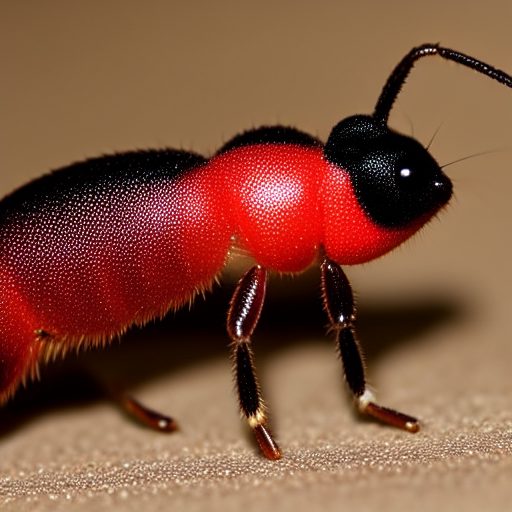
Nature spent millions of years solving the exact problems an AI system faces: sensing, coordination, memory, resilience. DarwinX does not imitate the animal, it borrows the principle. Here is the deep touch, as a scientist reads it - each creature mapped to a capability I build.
🦇
The bat
Chiroptera · echolocation, sensor fusion
A bat cannot see in the dark, so it turned sound into vision: it emits ultrasound, catches the echo in both ears, and its brain fuses time, direction, intensity and Doppler shift into a live 3D map. Different capability, extraordinary outcome. The lesson for AI is not the sonar, it is the fusion of several weak signals into one reliable representation.
The bat ->DarwinX agentic security: map the network by echo, detect the infiltrator as it enters, fuse signals instead of trusting one
The ants
Formicidae · stigmergy, no leader
There is no chief in the colony. Complex collective behaviour emerges from simple local rules and repeated interactions: an ant leaves pheromone, others reinforce the path that works and ignore the rest. The map lives in the environment, not in any single ant. That is exactly how a governed multi-agent system should coordinate.
The ants ->DarwinX swarm: filesystem-as-memory, stigmergic quorum, no central orchestrator, the colony computes what no agent could alone
🐝
The bee
Apis · the waggle dance, encoded signalling
A bee encodes the direction and distance of food into a dance, and the hive distributes roles from it. A complex system arises from local communication and simple rules, no central command. It is the proof that a compact, rhythmic signal can carry precise meaning, the same idea behind fast agent-to-agent signalling.
The bee ->DarwinX signalling: adaptive guards that reshape to the threat, meaning encoded in the pattern, not the word
⚡🐟
The electric fish
Gymnotiformes · evolutionary re-use
Muscle cells that lost their motor function were gradually repurposed to generate a voltage difference, used to navigate murky water, stun prey, defend, and even communicate by electric signal. The deep lesson: evolution re-uses an existing structure for a new function. DarwinX does the same, turning a shipped banking discipline into a governed agent, not a rebuild.
The electric fish ->DarwinX re-use: a proven core-banking flow becomes an auditable agentic flow, the same organ, a new function
🐙
The octopus
Octopoda · distributed nervous system
Rapid camouflage, colour and texture change, high flexibility, simple problem solving, driven by chromatophores and a distributed nervous system where the brain and the neural ganglia in the arms share the work. Intelligence does not need a single centre. DarwinX distributes cognition the same way: per-collaborator agents, workers, no shared singleton to leak.
The octopus ->DarwinX distribution: per-request agent, worker delegation, cognition at the edge, resilience without a single point
🦒
The giraffe
Giraffa · gradual selection
Individuals with slightly longer necks reached food others could not, and over many generations that trait spread. No leap, no design, just cumulative selection. It is the clearest reminder that intelligence is not born optimized, it is trained, generation after generation, exactly what the Lab simulates live.
The giraffe ->DarwinX evolution loop: mutate, select, evolve, ship, forever, sharper each generation (run it in the Lab)
Deep dive · a scientist reads the bat
The bat is an integrated system, not a superpower
The bat did not appear finished. It is the result of a long history of accumulated adaptations, where the wing membrane, the larynx, the ear and the brain work as one system. That is the touch worth borrowing.
🔊
How it makes the sound
The larynx generates ultrasound, emitted from the mouth or the nose, above 100 kHz, beyond human hearing. Sound, not light, becomes the primary sense.
📐
How it measures distance
Distance is inferred from flight time: distance is about the speed of sound times the time, divided by two (the sound goes and returns). The brain also reads direction, intensity and the Doppler shift of a moving target.
🧠
How it "sees"
Not sound turned into a picture, but echolocation: emit, propagate, reflect, catch the echo in both ears, analyse time and frequency, build a live 3D representation of the surroundings.
Originancestor was a small land mammal, not a flyer: climb, then limited glide, then a membrane between the limbs, then active flight
FossilOnychonycteris, over 50 million years old, already flew; its echolocation may have been less developed, still debated in science
Why echolocationthe night is poor in light, vision alone is not enough, a sound-based sense gave a decisive edge for hunting and navigating in the dark
What it inspiredsonar, obstacle-avoidance in robotics, and in AI the core idea: fuse several information sources for a reliable model instead of trusting one
From water to mind
The line every capability descends from
The earliest evidence points to life beginning in water more than 3.5 billion years ago, as very small organisms. Over an immense span of time, complexity accumulated, step by step, never by a leap.
unicellular->multicellular->fish->vertebrates onto land->amphibians->reptiles->mammals->bats, primates, and the rest
The human is not stronger or more evolved, only specialised in a different set: abstraction, language, long learning, cumulative culture and cooperation among large numbers of strangers. Bipedalism freed the hands for tools; culture let each generation build on the last. Other creatures specialised in electricity, echolocation, camouflage or flight, because those fit their world. There is no single winner, only different solutions.
The next step
The future of intelligence is technological evolution
Science sees two paths ahead. Biological evolution is slow, over many generations. Technological evolution, through tools, prosthetics, AI and brain interfaces, moves far faster. Today, most gains in human capability come from engineering, not from waiting on biology.
That is exactly what DarwinX is: the technological evolution of cognition. It borrows the principles nature proved, re-use, specialisation, cooperation, sensor fusion, cumulative learning, and encodes them into a governed agentic system that gets sharper every generation, without waiting millions of years.
Knowledge representation
The abstract principles, reusable as a knowledge base
Summarised as a scientist would, not as a story: precise, principle-first, reusable as a knowledge core. This is the abstraction that grounds every DarwinX capability.
Variationnatural difference between individuals is the raw material of evolution
Re-usean existing structure is repurposed for a new function (muscle to electric organ)
Specialisationa cell or organ performs one function with high efficiency
Adaptationthe spread of a trait shifts with the environment, cumulatively
Cooperationants and bees: complex order from simple local rules, no leader
Specialised sensingecholocation in bats, electric sense in some fish, fuse many signals
Communicationpheromones, dance, sound, electric signals: meaning in the pattern
Selectiontraits that grant an advantage in an environment spread; the rest fade